|
|
Sharing the loss of my dear friend Jay Cross |
| Saturday, November 07, 2015 |
Hello my friends. It has been a tad bit more than two months since my last post. The time has come despite the sleepiness. I am quite weary for several reasons but I feel the need to stay up tonight and grasp for air and jot down some thoughts.
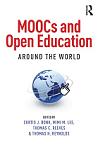
You see, two weeks ago, I was in Hawaii for the annual E-Learn conference (invited panel session). And this past week, I have been in Indianapolis while attending the 2015 AECT conference. In fact, yesterday morning, two of my most excellent colleagues (Dr. Tom Reeves from the University of Georgia and Dr. Mimi Miyoung Lee from the University of Houston) and I had a special presidential session at AECT on best practices for cultural sensitivity in MOOCs (slides and handouts). This session was based on our newly edited book with Routledge on MOOCs and Open Education Around the World.
A few hours later, Mimi and I got an award for our paper on the self-directed online learning goals, achievements, and challenges of MIT OpenCourseWare subscribers. It is great to get such feedback immediately after publication. After that, there was the closing ceremony and other events. Suffice to say, it was a highly active week (or couple of weeks) and hence I am most tired. But I feel that I must soldier on and blog now.
Why must I blog tonight? Well, I just found out that we have lost one of our foremost of learning leaders...my dear dear, friend Jay Cross. See link to blog post from Jane Hart below that one of my former
students just sent to me as well as the post from Clark Quinn. I am sure many more will arise in the coming days.
If you have not heard of Jay, please explore his homepage or whatever will replace it. Jay was always insightful, straight-shooting, and an immense
joy to talk to. He was a highly trusted friend who had the unique ability and
previous experiences to straddle and make sense of a wide array of emerging learning
trends. He could also think about how each of these trends or new approaches to learning impacted different educational sectors and then he would quickly write some engaging piece of prose about it. In it, he might discuss various economic, educational, or social problems that it might directly or indirectly address.
I feel fortunate to have corresponded with him recently…and
give him some feedback on one of his latest projects; namely, "Real Learning." In retrospect, I am delighted that he had reached out to talk to me. But that is Jay. It seems
that Jay’s last Internet Time blog post was a few days ago on this topic: Real Learning: Macro and Micro, Jay Cross, Nov., 4, 2015
He made a second post that day related to the Brain Matters conference in
which he was to keynote this coming Tuesday afternoon: Brain Matters, Jay Cross, Nov 4, 2015
We are fortunate that Jay made a recent video on Real Learning, October 24, 2015 (3:10). Read more details about the Real Learning project here or find some actual content or details here.
If one were to search for the word genius in a virtual encyclopedia, he or she might find Jay Cross as an example. I wish I could write like Jay. I wish I could read like Jay. Gosh I do wish I were half as smart as Jay. As Clark Quinn mentioned in his blog post, that man could synthesize a ton of stuff! And I truly wish I could offer you a recap of his life right here, right now. I wish I could stay awake for 48+ more hours straight so I could come close to providing a recap or overview piece that I am proud of. This will have to do. We all now suffer from the loss of one Jay Cross.
We/I have lost a true friend. I still remember meeting him
about 13-14 years ago at the E-Learning conference in April 2002 in DC which I believe Elliott Masie hosted. Near the end of the conference, there was a group of people sitting around various tables and reflecting on how the conference went. My friend Dr. Ellen Wagner pulled me aside and told me that I had to meet a guy sitting with a group of people at a nearby table. His name was Jay Cross and he was among those who 5 years earlier had become known for a new trend called E-Learning. We had a fascinating conversation that day and dozens of times after. There is no one out there with whom I can have candid feedback about pretty much any learning question that I might come up with. Jay knew pretty much everyone and everything in the field. He was a mentor, confidant, guide, inspirer, listener, creator, experimenter, and world knowledge synthesizer. No one like him in the world.
Whether Jay or someone else had coined the term e-learning mattered little. What mattered was that there was something unique that had emerged for delivering instruction to masses of people around the planet. Jay recognized this technological event was anything but ordinary. In fact, Jay himself was anything but ordinary. I was delighted that Ellen Wagner had pointed him out to me. We soon became good friends.
Jay seemed to know everybody. He certainly interviewed or reviewed some of the foremost authorities in learning and technology in his Internet Time blog. So much history of the fields of training and education, learning technology, e-learning, computer science, organizational culture, performance improvement, and business management in those posts. A college professor might assign his or her students to scour through Jay's Internet Time blog (as well as other resources from Jay Cross) and find some of these excellent historical pieces and hold class discussions on them. In fact, I may try this idea out tomorrow with my class.
A decade ago, when I was working on my monster book, " The Handbook of Blended Learning: Global Perspective, Local Designs," I felt fortunate that Jay agreed to do one of the two forewords. The other foreword was from the well known scholar, Dr. Michael G. Moore at Penn State. Jay's advice in that article was spot on as usual. Now that Jay has passed and that particular book is nearly a decade old, I decided to send email asking the good people at Wiley/Jossey-Bass if I can post the forewords to the Blended Learning Handbook to my PublicationShare website. I have taken the liberty of posting them for now and will remove it if they say no.
Jay Cross and Michael G. Moore. (2006). Forewords to the Handbook of Blended Learning: Global Perspectives, Local Designs. In C. J. Bonk & C. R. Graham (Eds.). Handbook of blended learning: Global Perspectives, local designs. San Francisco, CA: Pfeiffer Publishing.
As Jay points out, "The ideal blend is a blend of blends." See Jay's Figure F.1. Dimensions of the Blended Learning Stew. Thanks for those insights on blended learning Jay!
At the end of the day, Jay Cross was a champion of others. He would interview them. He would write to them and ask their opinions and later promote them when and where he could. He provided such services for me on many occasions. Jay would also organize teams of people to discuss new trends and innovations or to respond to some of his own ideas and recent writings. Examples of such team meetings might include ideas about new forms of conferences or meetings, some new synchronous conferencing technology, discussing various informal learning examples, and/or pretty much anything you or he might dream up. In addition to those group meetings, Jay would often gin up a novel idea and solicit feedback on it. Across it all, he was amazing.
I interacted with Jay on many occasions since that first meeting. Among them was the American Educational Research Association (AERA) meeting in San Francisco on April 10, 2006. My long-time friend and colleague, Dr. Kim Foreman, arranged for a special event over at San Fran State University that night including Ke Zhang, Bob Reiser, Brian Beatty, Jay Cross, myself, and others. I spoke on blended learning. I think Bob Reiser from Florida State University discussed some aspect of corporate training or human performance technology as did Jay. Many of my current and former students attended the event. See pics below. Unfortunately, of the five people in the first few pictures below, both Kim and Jay are now deceased (see my August 20, 2010 blog post on Kim).
I tried to get Jay to do the "Indiana I" with us, to no avail.
Jay and I both delighted in the overflowing crowd that was attracted that evening. Standing room only and many people sitting on the floor at SFSU.
Jay dazzled the crowd.
Then we went off to dinner. I still could not get Jay to do the "Indiana I" with a group of my current and former doctoral students at IU.
A few years later (January 27, 2009 to be exact), my colleague, Dr. YaTing Teng, and I had he privilege of walking the streets of Berkeley with Jay. And of course we grabbed some excellent lunch and he told us many a fine story. I cannot remember why I was in the Bay area that day (I will assume that I was at a conference of some type), but I am glad I was able to stop in to see Jay.
See below...unfortunately, it was not Jay's car, but why not take it for a spin? Jay seemed to know everybody except the owner of this car. Too bad!
Just a few months later, I had the opportunity to visit Jay again. This time I was at his house on April 4, 2009 (8 years to the day after MIT announced its OpenCourseWare project and 15 years to the day since Netscape went public; if interested, see my recent article on this). A few pictures from this visit are posted below. Jay was interviewing me about my World is Open book at the time and posting it to YouTube for his newest project and broadcast channel. What a beautiful area to live. Needless to say, I was jealous.
Jay invited several others and had a "Learning Irregulars" meeting. Our mutual friend, Clark Quinn, stopped by for it and is in a couple of the pictures with us below. Clark is in the red sweater. I am in the red shirt and tie. And Jay has his Hawaiian shirt on. Enjoy.
"The World is Open" pose with Jay Cross and Clark Quinn.
Jay gave me a tour of his lovely backyard. Then it was time for business.
There have to be hundreds of recordings of Jay on the Internet. Someone might want to compile them.
I learned the value of signing anything you give away form my dear friend Jay Cross.
I miss him already and I am sure many of you do too. There is no one in the world quite like Jay Cross.
Bonus pics with Jay from the Emerging E-Learning (EMEL) conference in Abu Dhabi, UAE, September 2-5, 2004:
A couple of days after writing the above blog post on remembering Jay Cross, my friend Vance Stevens reminded me of the class that I taught with Jay from Abu Dhabi in the UAE to Bloomington, Indiana in the USA late night on September 3, 2004 (it was actually the wee hours of September 4th where we were--there was a 9 hour time zone difference according to my notes from that day).
The videoconferencing system worked marvelously. Jay was a good sport and most excellent friend in staying up with me late that night. I think it was one of my doctoral students, Nari Kim, who handled the equipment for me in Bloomington. Thank you Nari (11 years too late)!
Was it my "The Perfect E-Storm" talk or my talk on "Navigating the Myths and Monsoons of E-Learning Strategies and Technologies." Either way, it was fun to use raincoats and umbrellas in the UAE where it rarely rains.
My class back in Bloomington looks on (including Jung Won Hur, Gina Anderson, Fang Fang, Mei-ya Liang, etc.). I have even found the syllabus: http://php.indiana.edu/~cjbonk/p600syl2.html. It was taught to both our Bloomington and Indianapolis campuses.
The day before (9/2/2004), we had lunch in the Sheikh Nahyan's Palace in Abu Dhabi. So much food! Anyone like goat, donkey, or camel? Well, if not, there is plenty of watermelon to go around.
And after lunch, was a business meeting of sorts.
In the final pictures below, Jay Cross and I were joined by another keynote speaker--my good friend John Hedberg (from Macquarie University in Australia). We closed out that conference on the afternoon of September 5, 2004 with a reflective drink in the hotel lounge. Speaking of John, he will remember me out on the balcony and getting locked out of my room one very hot morning during that conference and not being able to get back in (after waking up the first day with jet lag and not remembering what my room number was so no one could find me and let me in from the heat). What a nightmare that was!
Seems a good picture to end on...(unless I find a better one later). Goodbye Jay. Missing you even more now after posting these fond memories.
Short Addendum: Learning Trends from Elliott Masie today (11/11/2015) mentioned David Kelly's excellent curation of the stories about Jay Cross: An Industry Remembers Jay Cross, November 11, 2015. And Jane Hart's Twitter Tributes to Jay is now up to 286 comments. And this "In Memoriam: Jay Cross" piece from Learning Solutions also from November 11th is worth reading. He certainly had many fans, friends, and fellow Web-based learning travelers.
It might also be useful to post the obituary (My Obituary) that Jay wrote for himself back on June 20, 2015 as well as what seems to be his last blog ("plog"--or his "Personal Progress Blog") post written the day he died about going back for his 50th college reunion at Princeton this coming May 2016 (Going back, going back, going back to Nassau Hall by Jay Cross). Indeed, Jay had a multitude of writing outlets. He serves as a role model not just for being a highly productive writer and thinker, but on how to be a genuinely caring and helpful human being who wants the world to learn in whatever ways possible and in an effort to help others not only be more productive but to be happy in the process. I truly am blessed and quite happy to have met and worked with Jay Cross.Labels: AECT, blended learning, Clark Quinn, cultural sensitivity, E-Learn, Ellen Wagner, Elliott Masie, Informal Learning, Internet Time blog, Jane Hart, Jay Cross, MIT OCW, MOOCs, real learning, Tom Reeves |
|
|
|
|
|
Twenty Thoughts on the Types, Targets, and Intents of MOOCs |
| Saturday, June 16, 2012 |
Fourth Post in Four Days (one more to go):
For the past three days, I have posted information here in TravelinEdMan about the Massive Open Online Course (MOOC) that I did for Blackboard with their CourseSites people. Let's recap:
Day One (June 13): Posted interview with Jarl Jonas, Director of CourseSites from Blackboard about the MOOC.
Day Two (June 14): Posted links to a series of MOOC-related interviews with Amrit Ahluwalia from The EvoLLLution.
Day Three (June 15): Posted links to all the archived resources from the 5 weekly sync events in the MOOC.
= = = = = = = = = = = = = = = = = = = = = = = = = = = = = = = = = = = =
Today's and Tomorrow's Posts:
Day Four (June 16): Posted 20 ideas (with help from Jay Cross) on the different types and potential purposes of MOOCs.
Day Five (June 17): Posted unabridged transcript of a Chronicle of Higher Ed interview on the MOOC.
= = = = = = = = = = = = = = = = = = = = = = = = = = = = = = = = = = = =
Ok, this is the Day Four post. And tomorrow with be the final post. That fifth post will include my full interview responses to Jeffrey Young from Chronicle of Higher Education that he asked me about the MOOC. You may have read the shortened version of that interview as well as his interviews with 3 other professors who have done a MOOC lately (Four Professors Discuss Teaching Free Online Courses for Thousands of Students).
Anyway, on to Day Four. This story begins when I was on a chartered plane with some IU information technology people back on Monday June 4th. One of them, Brad Wheeler, the IU CIO and Vice President for Information Technology (VPIT), asked me about the MOOC that I had helped run and the types of MOOCs that might emerge in the coming years as financially viable and/or educationally worthwhile. Brad was aware there that are many questions being raised about the business plans of companies and other entities offering or promoting MOOCs today like edX, MITx, Coursera, Udemy, Udacity, etc. On the way home, we discussed several recent trends and announcements. That discussion got me thinking.
Starting the List...
When I got home from that short half-day trip, I jotted down some ideas in response to his question. I came up with 12 types of MOOCs that are possible or that might be employed in the coming years. When done, I sent them off to my friend Jay Cross over in Berkeley for review and went off running. During that run, I came up with four more MOOC-related ideas, all of which started with an "R" word. And so my list stood at 16 types, targets, or intents of MOOCs. As per usual, fantabulous Jay wrote me back a few hours later. He had found my list and questions to him "interesting" and suggested four additional ideas which brought my list up to 20. But Jay had an important caveat--he suggested that my list might be difficult to differentiate from large-crowd online experiences. As a result, it might not fit with initial MOOC criteria or intentions. Perhaps he was right. So I kept thinking.
So perhaps the following list of 20 ideas may become 30 as well in a week or two. Perhaps in just a day or two. Or perhaps I am done. Keep in mind that this is simply a little brainstormed list. There is nothing really scientific in it at this point. There is a listing in Wikipedia which you might find to be much better. Also remember Jay Cross' caution that this list may overlap significantly with ideas related to large-crowd online experiences that have nothing to do with education or with the purpose and function of MOOCs (at least, as originally constructed). If it does overlap, I am sure that there will be extensive criticism of my 20 item list. Please be aware that some of the ones mentioned below lean more toward the higher education world and other ones lean heavily toward the corporate sector. Some simply address adult and informal learner needs in general.
Apologies if the list below does not jive with the existing literature on MOOCs, steps on anyone's toes, or is offensive to anyone from any of these camps; especially those who offered some of the initial MOOCs and laid out the principles or criteria related to them. Such individuals have thought much longer and harder about this topic than I have. They are the brilliant, creative, and risk taking people in this space, not me. I am just responding to the question posed by my university CIO and VPIT and playing with ideas here as that is what one does in a blog. Thoughts? Here are 20 of mine (with significant input, as noted, from Jay Cross on four of them).
Twenty Types, Targets, and Intents of MOOCs:
1. Alternative Admissions Systems or Hiring System MOOC: A MOOC (or series of MOOCs) is offered and high scoring or impressive MOOC participants get admissions privileges, job interviews, or points if they later apply for a particular degree program, certificate, internship, or job.
2. Just-in-Time Skills and Competencies MOOC: Like Coursera and Udacity, the course is given to the online masses and paid by a subscription or a membership fee or by advertisements. As a former CPA and corporate controller, I see this as a fairly sound business plan for now; however, more specific details are needed. It is clear that tens of thousands of people are more than willing to sign up for a massive course as a means to sharpen their skills. The revenues could be quite astronomical. Let's hope the learning is too.
3. Theory- or Trend-Driven MOOC: Course discussion or activities focus on an emerging theory, trend(s), hot topic(s), or idea(s) and the MOOC is the ideal platform to showcase such a theory, idea, or trend. Take, for example, the current Change MOOC or connectivist-related ideas and courses from George Siemens and Stephen Downes.
4. Professional Development (PD) (practical) MOOC: People come and select the content that they wish to explore as a means to foster personal retooling, extension, and reflection. In a PD MOOC, there is limited (or no) testing or assessment of some minor little skills; instead, there is extensive sharing of what one has done in the past, what one is presently engaging in, and what one hopes to do next given this course experience. Examples here include the Blackboard/CourseSites MOOC that I just facilitated on "Instructional Ideas and Technology Tools for Online Success" or the MOOC that Ray Schroeder from the University of Illinois at Springfield orchestrated last summer that was called "Online Learning Today...and Tomorrow."
5. Loss Leader (dip toe in water) MOOC: Give away one course in every department or program as a means to attract new students to that major, program, or department. This type of MOOC may become the most pervasive type during the coming 2-3 years and then it could die a quick death. For those in the corporate world, see #13 below which stands to last much longer, but is similar to this idea.
6. Bait and Switch MOOC: Create a fantastic name for the MOOC or description of it and perhaps have celebrities involved in teaching it, but use it as a means to sell a product or to turn the audience on to something else. See also #9 below.
7. Experimental MOOC: Here, the instructor, program, or organization might use a MOOC to test out new concepts, findings, or ideas. In effect, the MOOC is a test-bed for one’s research and ideas. These could be pedagogical test-beds (i.e., testing out different learning technologies and activities) or highly scientific ones or both.
8. Degree or Program Qualifier or System Bottleneck MOOC: If there are early or introductory college courses that students tend to drop or fail, perhaps let high school students take the course prior to college in a MOOC-like format with other high school students from around the country or the planet. New connections could be formed among students heading to college. If there is a common bottleneck or course filter that weeds out too many students, a MOOC might be offered during the summer to let current students complete it in a self-paced fashion.
9. Personality MOOC: MOOC experience is offered with the main goal of meeting some celebrity or expert. Though masked in a specific topic like personal passion or leadership, any content actually learned is an add-on bonus.
10. Name Branding MOOC: MOOC is offered to help push out one’s brand name. This idea overlaps with #5 of the loss leader MOOC, #6 (if celebrities are used), and #9, and perhaps every other idea listed here. This one may smell familiar to many people.
11. Goodwill MOOC: MOOC is offered as part of a mission to help educate the people of this planet. In effect, instead of "giving the world a Coke," educational opportunities are offered. Many non-profit entities and foundations have significant Web presence today and offer myriad online resources (e.g., Seeds of Empowerment, iEARN, Impossible2Possible, etc.). A Goodwill MOOC might extend that. In a way, this is what many people initially envisioned when the OpenCourseWare (OCW) movement arrived over a decade ago with announcements from MIT, Yale, and others.
12. Interdisciplinary MOOC: MOOC has a series of panelists or guest experts from around the world (or from different departments at the same university or company) presenting content from disparate yet somehow related disciplines. Creativity and innovation will be targeted in such a MOOC. Participants enrolled in them might envision new degree programs or college majors, start-up businesses or new ventures, life goals and opportunities, personal quests, etc.
As indicated earlier, Jay Cross added the next four insightful MOOC ideas.
13. Recruiting MOOC: Covers a skill in demand, say, advanced Python programming. Companies in need, pay for names/contact information of high performers. Set up specifically for recruiting, not recruiting as by-product. This is similar to idea #1 mentioned above.
14. Marketing MOOC: Jay noted that he had just talked with a company that helps middle managers improve their practice by providing content which becomes the catalyst for discussions among small groups of managers. To buy the idea, people in the company have to believe in self-directed learning. A MOOC on management development and/or informal learning would attract potential customers. I must add to Jay's point by saying that there will likely be myriad other types of marketing MOOCs that unfold in the coming years; this is just one example.
15. Conference MOOC: Jay also suggested that as an adjunct to a professional conference, one might document the back channel, share the content, facilitate discussion, and so forth. A MOOC could help stretch out the conference from a short-term event to a lasting process.
16. Learning Room MOOC: A friend of Jay's makes and markets virtual conversation software; sort of an easy-to-use, Second Life type of tool for business types. One thing that his customers love is having a persistent space online with posters on the wall, presentations at the ready, and the opportunity to just drop by. A MOOC could fill the same role. Different topics could be cycled through. Events here could include discussions of TED talks, debates of current events, or courses on social media marketing.
Thanks Jay! Brilliant stuff as always. Life is good when you have a friend like Jay. As I indicated, after sending Jay an email with my original list of 12, I went jogging and four more ideas popped into my head. So I added them to my list of types, targets, and intents of MOOCs and now I am at 20 such thoughts. Here they are...notice that they all start with the letter "R" and yet I fail to use the big R word--Relevancy. Humm...
17. Religious Revival MOOC: Some MOOCs will undoubtedly meet with extreme success. When they do, learning communities will form, and, with that, new friendships, social networks, and personal as well as professonal relationships. There will be extensive amounts of socially shared history and stories of personal as well as group success resulting from such experiences. And like eating yummy Godiva dark chocolates, people will crave more such experiences. They will look forward to the next time it is offered or something akin to it is announced. It will be a revival of sorts...a MOOC sought after with religious fervor. Remember the online course that Oprah Winfrey and Eckhart Tolle offered to some 2 million people a few years ago with spiritual and religious undertones? Now think 5 or 10 times that and even that might be too conservative an estimate for the highly successful MOOCs.
18. Rotating MOOC: Some MOOCs might rotate topics between a set of introductory topics within a program, department, or discipline. Alternatively, the rotation might be between institutions or oganizations that offer them. For instance, one year, the core expertise might be at the University of Iowa and then next year it might come from the University of Central Florida, and so on, depending on where the strong programs are housed. Or it might rotate between experts in North America, South America, the Middle East, Europe, Africa, Asia, and Australia-New Zealand. Those in corporate settings might see the MOOC leadership or organizers rotate between different branch offices or headquarters.
19. Repeatable MOOC: As with rotating MOOCs, repeatable MOOCs might be of at least two types. For instance, the MOOC might be repeatedly offered and prior participants might be allowed to take it again and again and receive a badge or some other type of signature recognition since the content is constantly changing. Another type of repeatable MOOC is one that is offered every so often (perhaps each month or every other month) with basically the same set of content, structure, and goals. Once such a course is created, it is highly cost effective; especially if technology/machine-based assessment is employed, instead of human assessment. See idea #2 above for companies offering repeatable MOOCs already.
20. Reusable MOOC: As I noted in my blog post yesterday, the course that I just completed for Blackboard/CourseSites people is a type of reusble MOOC. All of the content has been preserved, including all of the weekly synchronous sessions that we held. While we had some 3,500 people initially, enrollment has now climbed to over 4,000 people as the registration stayed free and open during the course and will remain so long after. Anyone can reuse or repurpose that content. In effect, the MOOC remains open for future students (i.e., you) to go in and learn and perhaps earn a badge or whatever. Good luck.
After completing the above list, I went running in the 91 degree heat we have today in Bloomingotn, Indiana. Fortunately or unfortunately, I did not think of any new ideas when running. So that is it for my starter list for now. These are twenty quick thoughts on the types, targets, and intents of MOOCs. I fully realize that I did not discuss the theory or principles underlying effective MOOCs. As I indicated above, many others write much more eloquently, forcefully, fervently, insightfully, and thoughtfully about all of that theory stuff than I do (ya, my graduate degrees are in educational psychology, but I sorta was forced to leave that field 6-7 years ago and so "my mind is a zero" as the song says). If you want to know the principles, philosophies, or criteria of MOOCs, read their work. Or perhaps read Dan Butin's thought provoking piece in eLearn Magazine this month on what he thinks MIT should have done.
This particular blog post is more on the practical or implementation side than the theoretical side. The audience, therefore, is perhaps more geared to practitioners and administrators than theoreticians and experts in the emerging field of MOOCism. Again, I am just trying to answer the questions raised by my CIO/VPIT as we flew home two weeks ago.
There is much still to discuss. Questions are being raised not only about the business plans of MOOCs, but also about who is taking these courses (i.e., demographics), the language surrounding MOOCs (i.e., terminology), the forms of assessment or credentialing (i.e., making it count), and so on. I think that understanding the various types, targets, and intents of MOOCs might help a bit in addressing those vital questions. Hence, I offer my list of 20 thoughts. Your lists will likely differ from mine. Best wishes.
= = = = = = = = = = = = = = = = = = = = = = = = = = = = = = = = = = = = = = = =
Note: Earlier blog posts that I made on the "BonkOpen" MOOC and MOOCs in general are below.
April 19th: A Close Up Look at an Upcoming May MOOC
April 29th: Video Intro for Upcoming MOOC and IU Press on the Event
May 1st: Open-access articles on the "Digital Campus" about open access
May 7th: There's a whole lot of MOOC'en going on! (or: "The Multimedia MOOC")Labels: Blackboard, Coursera, CourseSites, David Wiley, edX, eLearn Magazine, Jay Cross, Massive Open Online Course (MOOC), MITx, the Chronicle of Higher Education, TravelinEdMan, Udacity |
|
|
|
|
|
|